
AI SEO is the practice of optimizing your content so it ranks well not just in Google’s traditional search results, but also in AI-generated answers — including Google AI Overviews, ChatGPT responses, and Perplexity citations. The rules of search have shifted. In 2026, showing up in an AI summary matters as much as ranking on page one. If your content isn’t built for AI systems to read, extract, and trust, you’re already behind.
What is AI SEO
AI SEO is the evolution of traditional search optimization, designed for a world where AI systems – not just algorithms decide which content surfaces first. When a user asks Google a question today, an AI reads dozens of pages, pulls the most relevant and trustworthy answer, and presents it at the top. Your job as a content creator is to make sure your page is the one that gets chosen. This requires writing content that is clear, structured, authoritative, and genuinely useful — not content stuffed with keywords for a crawler to count.
How AI SEO Works
AI systems like Google’s Gemini, which powers AI Overviews, scan content the same way a smart reader would. They look for pages that directly answer a question, explain it with clarity, and back it up with credible context. Take a real example: if someone searches “best diet for diabetes management,” the AI Overview pulls from pages that open with a direct answer, use simple language, and are written by or attributed to health professionals. A generic listicle with no author and vague advice will get skipped. Specificity and structure win.
AI SEO vs Traditional SEO
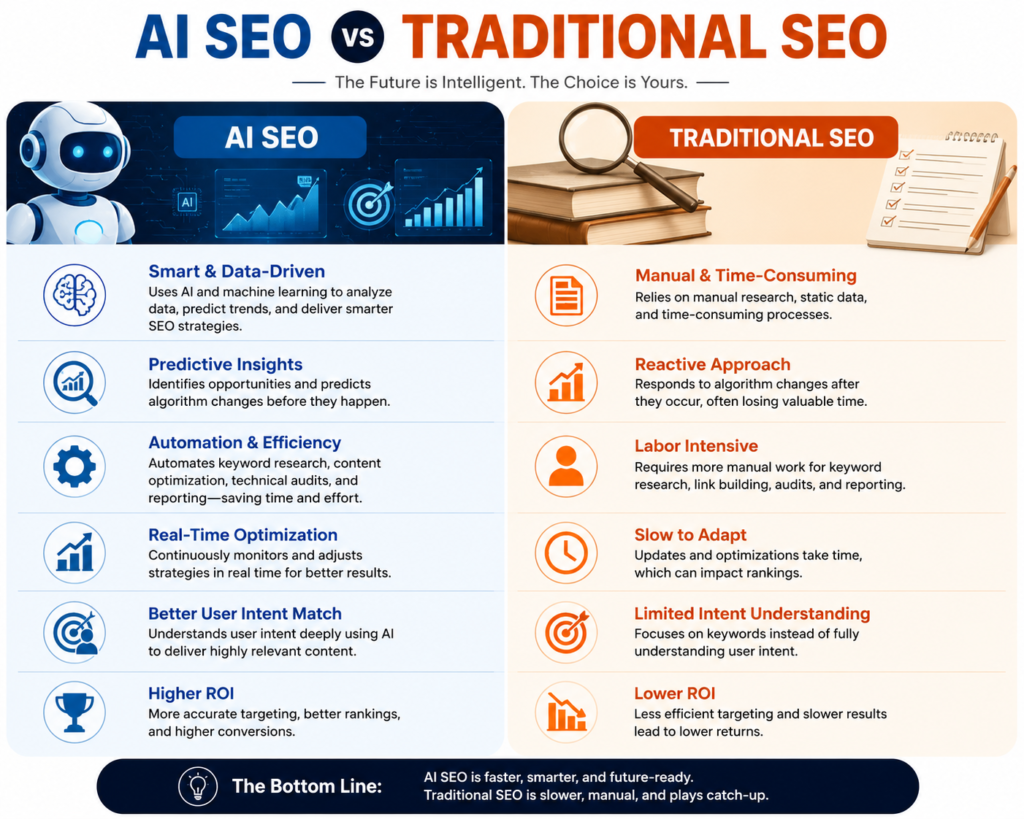
Traditional SEO focused heavily on keyword density, backlinks, and metadata. Those signals still matter, but they no longer tell the whole story. AI SEO adds a new layer: how well can a machine understand, extract, and confidently recommend your content? A page can have strong backlinks and still be ignored by AI Overviews if the content is vague or poorly organized. The key shift is moving from “ranking for keywords” to “answering questions with authority.”
The Role of E-E-A-T
Google’s quality framework – Experience, Expertise, Authoritativeness, and Trustworthiness — has become the backbone of AI SEO. AI systems are trained to favor content from sources that demonstrate real-world experience. This means adding author credentials, citing credible sources, and writing from a perspective that reflects genuine knowledge, not surface-level research. A blog post written by a certified nutritionist about gut health will consistently outperform an anonymous article covering the same topic, even if both are technically well-written.
Writing LLM Friendly Content
The most practical thing you can do right now is structure your content so the first two to three lines directly answer the main question of the page. After that, support the answer with context, examples, and specifics. Use clear subheadings that mirror how a person would phrase a search query. Keep paragraphs focused — one idea per paragraph works best for AI extraction. Avoid burying your core answer under long introductions or promotional language.
A Real World Example
Consider two fitness websites both targeting the query “how to lose belly fat fast.” Site A opens with a paragraph about their brand story, then lists 20 tips with no depth. Site B opens with: “The most effective way to reduce belly fat combines a caloric deficit with resistance training and improved sleep quality — all backed by consistent research.” Site B then explains each point in detail, links to a study, and names the author’s qualifications. When Google’s AI processes both pages, Site B is the clear choice for an AI Overview citation. The difference is not luck — it’s intentional structure.
Conclusion
AI SEO is not a replacement for good SEO -it is an upgrade. The fundamentals of quality content, real expertise, and user focused writing have never been more important. What has changed is the standard of clarity and structure that content must meet to be selected by AI systems. If you write content that genuinely answers questions, comes from a place of experience, and is organized in a way that both humans and machines can follow easily, you are already practicing AI SEO. The question for 2026 is not whether AI search matters – it is whether your content is ready for it.
Leave a Reply